Starting a business is an exciting journey. Many people dream of creating a company, solving a real problem, and building something valuable. But one of the biggest challenges for new founders is money. A great idea can fail if there is not enough money to support growth at the right time.
Many people think that startups always need big investors to become successful. They believe the first step is to create a pitch, meet investors, and raise millions of dollars. However, this is not the only way to build a successful company. Many founders today are choosing a different path where they grow their businesses with their own resources and customer income.
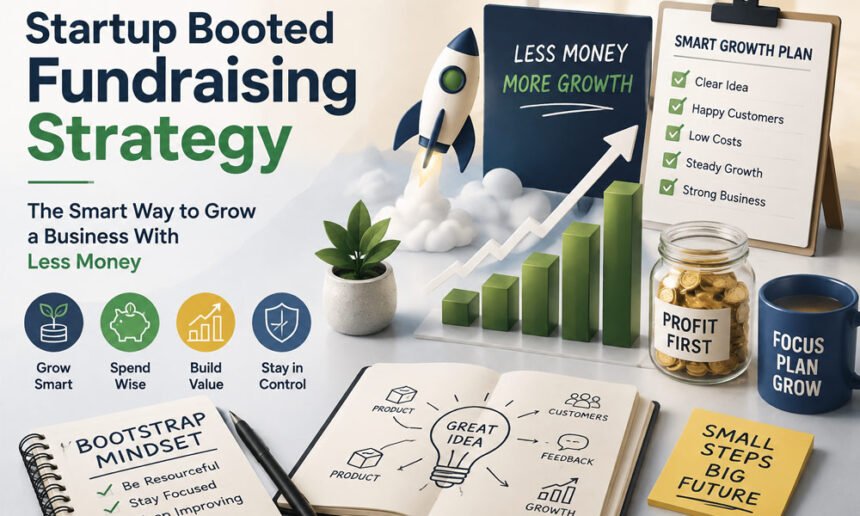
This approach is known as the Startup Booted Fundraising Strategy. It focuses on building a strong business step by step without depending fully on outside investors. Founders use smart spending, early customers, and business revenue to grow their companies while keeping more control.
In this article, we will explain everything about the Startup Booted Fundraising Strategy. We will discuss what it means, why more founders are choosing it, how it works, its benefits, challenges, different models, and how it can help businesses grow with less money.
What Is Startup Booted Fundraising Strategy?
A Startup Booted Fundraising Strategy is a way of building a business by using personal savings, early customer payments, and company income instead of depending on investors in the beginning. The founder focuses on creating value first and raising money later if needed.
In simple words, it means a startup grows using the money it earns. Instead of spending large amounts before knowing if people want the product, founders first test their ideas, find customers, and use that income to improve the business.
For example, imagine someone creates a small software tool. Instead of spending thousands of dollars on a large office, a big team, and expensive marketing, they create a simple version of the product. They find a few customers, collect feedback, and use the earnings to make the product better.
The main idea behind a Startup Booted Fundraising Strategy is simple: build a business that can support itself. The focus is not only on getting money but on creating a company with real customers and steady growth.
This strategy does not mean founders should never take investment. It simply means they do not rush into funding too early. They first build a strong foundation so they can make better choices later.
Why Startup Booted Fundraising Strategy Is Growing Popular
In recent years, many founders have started looking at fundraising in a different way. Getting investment is not always easy, and many investors now want to see strong growth, real customers, and clear results before giving money.
Because of this change, many entrepreneurs are choosing the Startup Booted Fundraising Strategy. They want to avoid giving away ownership too early and prefer to build their companies at their own speed.
For many founders, control is one of the biggest reasons to choose this path. When investors invest money, they often expect fast growth and may influence important business decisions. A booted startup allows founders to stay closer to their original vision.
Another reason is financial pressure. Some funded startups spend large amounts of money trying to grow quickly. If growth does not happen as expected, they may face serious problems. Booted startups usually grow slower, but they often build stronger financial habits.
Think about two business owners. One spends money quickly because they have investor funding. The other carefully uses every dollar because they are building with their own resources. The second founder may grow slower, but they may create a stronger and more stable company.
How Startup Booted Fundraising Strategy Works Step by Step
The Startup Booted Fundraising Strategy usually starts with a simple idea: use what you have and grow from there. Founders do not try to build everything at once. They take small steps and improve as they learn.
The first step is usually using personal resources. This can include personal savings, income from another job, or money from a small side business. The goal is to create the first version of the product without taking large financial risks.
After that, founders focus on building a Minimum Viable Product (MVP). An MVP is a simple version of a product that solves the main problem for customers. It does not need every feature. It only needs to provide enough value for people to use it.
For example, a founder creating an online learning platform does not need to build hundreds of courses at the start. They can begin with a few useful lessons, test customer interest, and improve based on feedback.
The next important step is finding paying customers. Customers are not only users; they are also the first source of business income. Their payments help the startup continue growing.
As revenue increases, founders reinvest the money back into the business. They may spend it on improving the product, marketing, hiring help, or creating better systems.
This step-by-step approach helps startups grow carefully. Instead of depending on future funding promises, they build growth through real business results.
Main Types of Startup Booted Fundraising Strategy
There are different ways founders can follow a Startup Booted Fundraising Strategy. The right method depends on the founder’s situation, business type, and available resources.
Some founders use their personal money, while others depend on customer revenue. Some continue working another job while building their startup slowly. Each method has its own benefits and challenges.
Understanding these different models helps new founders choose the best path for their business.
Personal Savings Model
The personal savings model is one of the most common forms of booted fundraising. In this method, founders use their own money to start and operate the business.
Many small businesses begin this way. A founder may use savings from a previous job to buy tools, create a website, develop a product, or market their service.
The biggest benefit of this model is control. Since there are no outside investors, the founder keeps full ownership and can make decisions freely.
However, it also comes with personal risk. If the business does not succeed, the founder may lose their own money. This is why careful planning and smart spending are very important.
Revenue-Based Model
The revenue-based model focuses on growing through customer income. The startup tries to earn money as early as possible and uses that income to support future growth.
This model encourages founders to focus on real customer needs. Instead of building a product based only on ideas, they create something people are willing to pay for.
For example, a software company may launch a basic subscription plan. The money from early users can then be used to improve features and attract more customers.
The challenge is that growth may be slower at the beginning. Without outside funding, some areas like marketing and hiring may take more time.
However, this approach creates strong financial discipline and helps build a healthier business.
Side-Hustle Model
The side-hustle model allows founders to build a startup while keeping another source of income. Many new entrepreneurs choose this method because it reduces financial pressure.
A person may work a full-time job during the day and spend evenings or weekends building their business. The income from their job helps cover personal expenses while they grow the startup.
This approach gives founders more time to test their ideas. They can learn what works before leaving their main job.
The biggest challenge is managing time and energy. Building a startup and working another job can be difficult. Good planning and discipline are needed to make progress.
Lean Startup Model
The lean startup model is another popular way to follow a Startup Booted Fundraising Strategy. In this method, founders focus on keeping costs as low as possible while building a useful business.
Instead of spending money on expensive offices, large teams, or unnecessary tools, founders look for simple solutions. They may work remotely, use affordable software, and hire freelancers when needed.
For example, a new online service company may not hire a full team at the beginning. The founder may handle some tasks, use automation tools for others, and bring experts only when needed.
The biggest advantage of this model is that the startup can survive longer with less money. However, founders need to manage their time carefully because they often handle many roles in the early stages.
Benefits of Startup Booted Fundraising Strategy
The Startup Booted Fundraising Strategy offers many benefits for founders who want to build a strong business with more control. It allows entrepreneurs to focus on creating real value instead of only chasing investment.
One of the biggest benefits is ownership. When founders do not take outside money too early, they can keep a larger part of their company. This gives them more freedom to make decisions based on their own goals.
For example, a founder may decide to improve a product based on customer feedback instead of changing it because an investor wants a different direction.
Another important benefit is better financial discipline. When money is limited, founders learn to spend carefully. They think more before making decisions and focus only on things that can help the business grow.
Booted startups also build stronger customer relationships. Since customers become the main source of income, founders pay more attention to solving real problems and keeping users happy.
Challenges of Startup Booted Fundraising Strategy
Although the Startup Booted Fundraising Strategy has many advantages, it also comes with challenges. Building a company without large funding requires patience, planning, and strong decision-making.
One common challenge is slower growth. A startup with millions of dollars from investors may hire more people and spend more on marketing. A booted startup usually grows step by step because it depends on available income.
This does not mean slow growth is bad. Many successful companies grew slowly in the beginning and became strong because they built a stable foundation.
Another challenge is limited resources. Founders may have fewer employees, smaller marketing budgets, and fewer tools compared to funded competitors.
There can also be personal pressure. When founders use their own money, they carry more responsibility. This is why careful planning and smart money management are very important.
Building a Product With Startup Booted Fundraising Strategy
A strong product is the heart of every successful startup. In a Startup Booted Fundraising Strategy, founders focus on creating a simple product that solves a clear problem.
Many new entrepreneurs make the mistake of trying to build a perfect product before talking to customers. This can waste time and money.
A smarter approach is to create a Minimum Viable Product (MVP). This is a basic version of the product that allows founders to test their idea with real users.
For example, if someone wants to create a food delivery app, they do not need to build a large app immediately. They can start with a simple website, take orders manually, and learn what customers need.
Customer feedback is also very important. Founders should listen to users, understand their problems, and improve the product over time.
The goal is not to build everything at once. The goal is to solve one problem very well.
Marketing Growth With Startup Booted Fundraising Strategy
Marketing is important for every startup, but booted startups usually cannot spend huge amounts on advertising. They need smart and affordable methods.
A Startup Booted Fundraising Strategy often depends on low-cost marketing methods like content creation, SEO, social media, and customer referrals.
Content marketing helps startups attract people by sharing useful information. Blogs, videos, guides, and helpful posts can bring new customers without spending large amounts on ads.
Social media is another powerful tool. Founders can build communities, talk directly with customers, and create trust around their brand.
Word-of-mouth is also very valuable. When customers enjoy a product, they naturally tell others about it. This can create steady growth over time.
Financial Planning for Startup Booted Fundraising Strategy
Good money management is one of the most important parts of the Startup Booted Fundraising Strategy. Since founders do not have unlimited funds, every decision matters.
A startup should always track where money is coming from and where it is going. This helps founders understand their financial situation and avoid problems.
Important areas to watch include:
- Monthly income
- Business expenses
- Customer growth
- Marketing costs
- Future plans
Founders should also understand important numbers like Customer Acquisition Cost (CAC) and Customer Lifetime Value (LTV).
CAC shows how much money a company spends to get one customer. LTV shows how much value that customer brings over time.
A healthy startup usually wants the value of a customer to be higher than the cost of getting that customer.
Emergency savings are also helpful. Unexpected problems can happen, and having extra money can help a startup survive difficult times.
Startup Booted Fundraising Strategy vs Venture Capital Funding
Many founders wonder whether they should bootstrap their startup or look for investors. Both options have benefits, but they work differently.
With a Startup Booted Fundraising Strategy, founders usually keep more ownership and control. They grow using their own money and customer revenue.
With venture capital funding, founders receive money from investors. This can help companies grow faster, but founders usually give away some ownership and may have more pressure to meet investor goals.
Here is a simple comparison:
| Booted Fundraising | Venture Capital |
|---|---|
| Founder keeps more ownership | Ownership is shared |
| Growth is steady | Growth can be very fast |
| More control | Investors may influence decisions |
| Focus on profit | Focus on large growth |
| Lower spending | Higher spending |
The right choice depends on the business. Some companies need investors because they require large amounts of money early. Others can grow successfully without them.
Successful Companies Using Startup Booted Fundraising Strategy
Many well-known companies started with a booted approach. Their stories show that a business does not always need large investment to become successful.
Mailchimp
Mailchimp started as a small project and grew by focusing on customer needs. The company used revenue from customers to improve its product and expand.
Its story shows the power of patience and smart growth.
Zoho
Zoho built a global software business while keeping strong control over its company. It focused on creating useful products and building long-term customer relationships.
Basecamp
Basecamp became successful by focusing on simple products and sustainable growth. The company showed that a smaller team can still build something valuable.
These examples teach founders that success comes from solving problems, serving customers, and making smart decisions.
When Should You Raise External Funding After Bootstrapping?
A Startup Booted Fundraising Strategy does not mean founders should avoid investors forever. Sometimes outside funding can help a business grow faster.
The best time to raise money is when the startup already has proof that it works.
Signs that a startup may be ready include:
- Growing customer numbers
- Strong revenue
- Good customer retention
- A clear growth plan
- A proven product
Raising money from a strong position gives founders more power. They can choose better investors and negotiate better terms.
Money should be used to speed up success, not to fix a broken business.
Common Mistakes to Avoid in Startup Booted Fundraising Strategy
Many founders make mistakes when trying to grow without investors.
One common mistake is spending too much money too early. Some founders build large teams, spend heavily on marketing, or create too many features before understanding their customers.
Another mistake is ignoring cash flow. A startup can have a great idea but still fail if it does not manage money properly.
Founders should also avoid waiting too long to invest in growth. Saving money is important, but smart spending can help the business move forward.
The key is balance. Spend carefully, but do not stop growth completely.
Future of Startup Booted Fundraising Strategy
The future of the Startup Booted Fundraising Strategy looks promising in 2026. New technology is making it easier for small teams to build and grow companies.
AI tools, automation, and online platforms help founders complete tasks faster and reduce costs.
For example, a small startup can now use AI tools for customer support, marketing ideas, research, and daily work. This allows founders to do more without hiring a large team.
More entrepreneurs are also focusing on profit and stability instead of only chasing fast growth.
The startup world is changing. Many founders now understand that a strong business is not only about raising money. It is about creating value, keeping customers, and building something that can last.
Conclusion
The Startup Booted Fundraising Strategy gives founders another way to build successful companies. It shows that a startup does not always need millions of dollars to grow.
By focusing on customers, smart spending, and steady improvement, founders can create strong businesses while keeping more control.
This strategy requires patience and hard work, but it can create long-term success.
The biggest lesson is simple: money can help a business grow, but a great product, happy customers, and smart decisions create real success.
For many founders in 2026, building first and raising later may be the smarter path. A startup becomes stronger when it earns trust, creates value, and grows with a clear purpose.
People also read: Top Small Business Ideas 2026 That Can Turn Your Skills Into Income